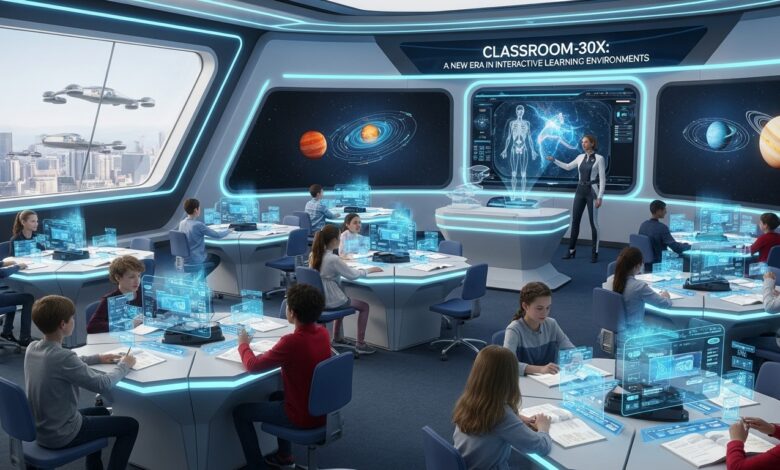
Welcome to the future of education, where traditional classrooms meet cutting-edge technology. Enter Classroom-30X—a revolutionary interactive learning environment designed to engage students like never before. Gone are the days of monotonous lectures and one-way communication. With Classroom-30X, students become active participants in their learning journey, transforming how they acquire knowledge. This innovative platform combines advanced tools and dynamic content to create an immersive educational experience that caters to diverse learning styles. Curious about what makes Classroom-30X a game-changer? Let’s dive into its features and discover how it is reshaping classrooms across the globe!
Features of Classroom-30X
Classroom-30X boasts a range of innovative features designed to enhance the educational experience. Its modular design allows for flexible configurations tailored to various teaching methods and group sizes.
Interactive touchscreens serve as central hubs, enabling seamless collaboration among students. This fosters an engaging environment where learners can participate actively in discussions and activities.
Integrated multimedia tools bring lessons to life through videos, animations, and simulations. Teachers can easily incorporate different media types into their presentations, catering to diverse learning styles.
Real-time analytics provide educators with valuable insights into student performance and engagement levels. This data empowers teachers to adjust their strategies on-the-fly for maximum effectiveness.
Classroom-30X’s compatibility with various educational apps ensures that schools can leverage existing resources while adopting cutting-edge technology seamlessly.
Benefits of Interactive Learning Environments
Interactive learning environments transform traditional education. They engage students on multiple levels, making lessons more memorable and enjoyable.
Students become active participants rather than passive listeners. This involvement fosters critical thinking skills and encourages collaboration among peers. When learners share ideas and solve problems together, they develop a deeper understanding of the subject matter.
Another significant benefit is tailored learning experiences. Interactive tools can adapt to individual needs, allowing students to progress at their own pace. This personalization boosts confidence and nurtures a love for learning.
Moreover, technology integration enhances accessibility. Resources are available anytime and anywhere, breaking geographical barriers that once limited educational opportunities.
Interactive platforms spark creativity by encouraging exploration beyond the textbook’s confines. Students can experiment with concepts in real-world scenarios or simulations—bridging theory with practice seamlessly.
Case Studies: Schools using Classroom-30X
Several pioneering schools have embraced Classroom-30X, transforming their learning spaces into dynamic hubs of interaction. At Riverview High School, educators report a notable increase in student engagement. The blend of technology and collaborative methods fosters teamwork among students.
In Brookfield Academy, teachers utilize the flexible design to cater to diverse learning styles. Students can shift from group discussions to individual work seamlessly. This adaptability has led to improved academic performance across various subjects.
Woodland Middle School implemented Classroom-30X for STEM classes, where hands-on experiments thrive in an interactive environment. Teachers observe greater excitement around projects as students actively participate rather than passively listen.
Each case study highlights unique adaptations and positive outcomes that showcase the potential of Classroom-30X in real-world settings. These examples illustrate how reimagining classroom environments can yield significant educational advantages while enriching the overall learning experience for students and educators alike.
Future of Classroom-30X and its Impact on Education
The future of Classroom-30X promises to reshape the educational landscape significantly. As technology continues to evolve, so do the possibilities for interactive learning environments. With advanced features like augmented reality and AI-driven personalized learning paths, students can engage more deeply with content.
Imagine classrooms where real-time feedback enhances student understanding instantly. Teachers could adapt their methods on-the-fly based on individual performance metrics. This flexibility will foster a more inclusive atmosphere for all learners.
Furthermore, as remote and hybrid models become standard practice, Classroom-30X will bridge gaps between traditional teaching and modern demands. The integration of collaborative tools allows students from different locations to work together seamlessly.
As we look ahead, it’s clear that Classroom-30X is not just a tool; it’s becoming an integral part of how education evolves in response to societal needs and technological advancements. Transformative shifts are on the horizon.
Potential Challenges and Solutions
While Classroom-30X presents a revolutionary approach to education, it does come with its challenges.
One major hurdle is the digital divide. Not all students have equal access to technology and reliable internet connections. This can create disparities in learning experiences.
Another concern is teacher training. Educators need proper guidance on how to effectively utilize interactive elements within Classroom-30X. Without adequate training, the potential of this tool may not be fully realized.
Moreover, there might be resistance from traditionalists who prefer conventional teaching methods. Change can be daunting, but it’s essential for growth.
To tackle these issues, schools could provide resources like subsidized devices or internet access programs for underserved communities. Investing in comprehensive professional development will empower teachers to adapt confidently.
Encouraging open dialogue about innovation in education can also ease fears and foster acceptance among skeptics.
Conclusion
Classroom-30X represents a transformative leap in how education is delivered. By embracing technology and innovative design, it creates an environment that fosters engagement, collaboration, and creativity among students.
As schools across the globe adopt Classroom-30X, we’re witnessing firsthand its potential to revolutionize educational experiences. The features of this interactive learning space cater to diverse learning styles while also encouraging critical thinking and problem-solving skills.
The benefits are profound; increased student participation, improved academic performance, and enhanced teacher-student interactions all contribute to a more effective learning atmosphere.
However, as with any new initiative, there are challenges ahead. Schools must address issues such as budget constraints or training for educators to maximize the effectiveness of Classroom-30X. Solutions will emerge from collaboration between stakeholders—teachers, administrators, parents—and ongoing evaluations of the program’s impact.
The future holds promise for Classroom-30X in shaping how we think about teaching and learning. Its integration into classrooms not only prepares students for a rapidly changing world but also redefines what it means to educate effectively in the 21st century.
Embracing this evolution can lead us toward making significant strides in educational practices worldwide.